
Why Coral Gables Homeowners Are Adding Basement In-Law Suites
South Florida's housing market has made multi-generational living more popular than ever. Whether you're welcoming aging parents closer to home, creating a private space for an adult child, or exploring the possibility of supplemental rental income, a basement in-law suite is one of the smartest investments you can make in your Coral Gables home.
Unlike a full home addition that requires expanding your footprint, a basement conversion uses space you already have. That means lower construction costs, faster timelines, and zero impact on your yard or exterior architecture — something particularly important in Coral Gables, where historic charm and neighborhood aesthetics matter.
But turning a raw or underused basement into a comfortable, code-compliant living space involves more than throwing up some drywall. Here's a comprehensive look at what the process actually requires.
Step 1: Assess Your Basement's Current Condition
Before any design work begins, your basement needs a thorough evaluation. Key factors include:
- Ceiling height: Most building codes require a minimum ceiling height of 7 feet for habitable rooms. If your basement falls short, solutions like lowering the floor slab or adjusting ductwork may be necessary.
- Moisture levels: South Florida's humidity and water table make waterproofing a non-negotiable first step. Any signs of dampness, mold, or water intrusion need to be addressed before finishing begins.
- Foundation integrity: Cracks, settling, or structural concerns should be evaluated by a professional before walls go up.
- Existing utilities: The location of your electrical panel, plumbing lines, and HVAC system will influence the layout of your suite.
A professional assessment saves you from costly surprises mid-project. At Basement Remodeling Pros, we start every project with a detailed inspection so homeowners know exactly what they're working with.
Step 2: Design a Layout That Feels Like a Real Home
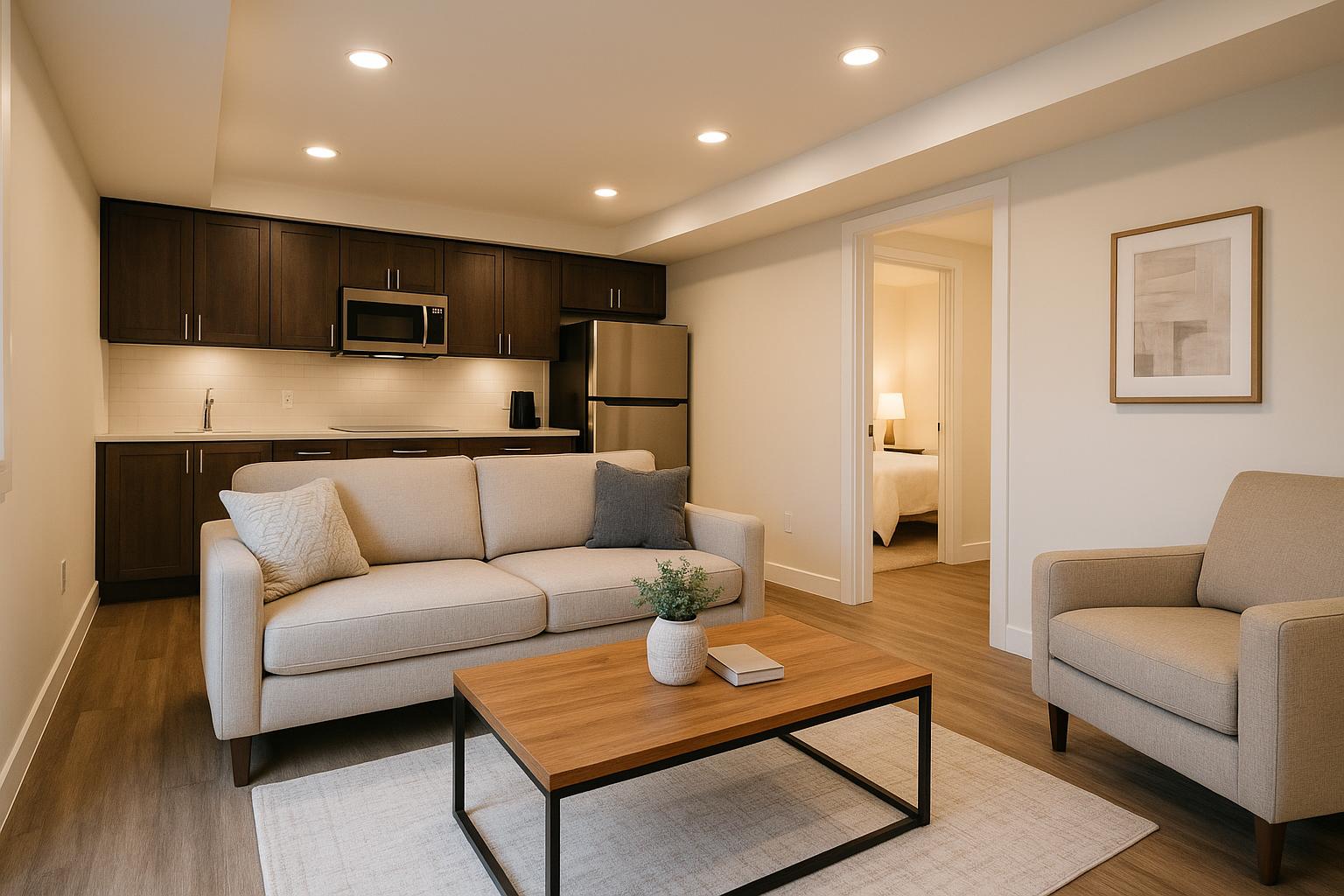
An in-law suite isn't just a bedroom in the basement. To function as a true private living space, it should include:
- A full bathroom with a walk-in shower for accessibility
- A small kitchenette or wet bar with a sink, mini-fridge, and microwave at minimum
- A dedicated living area separate from the sleeping space
- Adequate closet and storage space
- A private entrance if possible, for independence and convenience
The goal is to give your guest or tenant a sense of autonomy. Nobody wants to feel like they're living in someone else's storage room. Thoughtful layout design makes all the difference between a space that feels like a real apartment and one that feels like an afterthought.
Accessibility Considerations
If the suite is intended for an aging parent or someone with mobility challenges, plan for wider doorways (at least 36 inches), grab bars in the bathroom, non-slip flooring, and lever-style door handles. These features are inexpensive to include during construction but costly to retrofit later.
Step 3: Address Waterproofing Before Finishing
This step deserves its own section because it's that important — especially in Coral Gables and the greater Miami area. Our proximity to the coast, combined with a high water table and frequent heavy rains, means basement moisture is a real and persistent concern.
Proper waterproofing typically involves:
- Interior drainage systems or sump pumps
- Vapor barriers on walls and floors
- Exterior waterproofing membranes when accessible
- Dehumidification systems integrated into the HVAC
Skipping this step to save money is a mistake that almost always costs more in the long run. Mold remediation, damaged finishes, and health concerns are far more expensive than doing waterproofing right the first time.
Step 4: Handle Permits and Code Compliance
Converting a basement into a habitable living space in Coral Gables requires permits. This isn't optional, and it's not something to cut corners on — especially if you plan to rent the space or if it factors into your home's resale value.
Common code requirements for basement living spaces include:
- Egress windows or doors: Every bedroom must have a secondary means of escape in case of fire. Egress windows must meet specific size requirements.
- Smoke and carbon monoxide detectors: Required in all sleeping areas and adjacent hallways.
- Electrical standards: GFCI outlets near water sources, adequate circuit capacity, and proper lighting.
- Plumbing permits: Required for any new bathroom or kitchen fixtures.
- Ventilation requirements: Bathrooms and kitchenettes need proper exhaust ventilation.
Working with a remodeling company that understands local permitting processes streamlines this considerably. We handle permit applications and inspections as part of every basement project we take on in Coral Gables and surrounding communities like Coconut Grove, Pinecrest, and South Miami.
Step 5: Choose Finishes That Are Durable and Inviting
Basement environments have unique demands. The finishes you choose need to handle potential moisture while still looking and feeling like a comfortable home.
Flooring
Luxury vinyl plank (LVP) is the gold standard for basement floors. It's waterproof, durable, comfortable underfoot, and comes in styles that convincingly mimic hardwood. Avoid traditional hardwood and carpet, which are vulnerable to moisture damage.
Walls
Moisture-resistant drywall (often called green board or purple board) is essential. For an extra layer of protection, consider closed-cell spray foam insulation behind the walls, which acts as both insulation and a vapor barrier.
Lighting
Basements naturally lack natural light, so your lighting plan matters enormously. Recessed LED lights on dimmer switches create a warm, adjustable ambiance. If egress windows are part of the plan, position them strategically to maximize daylight in the main living areas.
Ceiling
A finished drywall ceiling gives the most polished look, but a drop ceiling provides easier access to plumbing and electrical above. Many homeowners opt for a hybrid approach — drywall in living areas and drop ceiling panels in utility-adjacent zones.
What Does a Basement In-Law Suite Cost in Coral Gables?
Costs vary significantly based on the size of the space, the condition of your existing basement, and the level of finish you want. As a general range, homeowners in the Coral Gables area can expect to invest between $40,000 and $80,000 for a complete in-law suite with a bathroom, kitchenette, and quality finishes.
That said, the return on investment is substantial. A finished basement in-law suite can increase your home's value by 70% or more of the project cost, and if you choose to rent the space, monthly income can offset your investment within a few years.
Is a Basement In-Law Suite Right for Your Home?
If you have an unfinished or underused basement and a need for additional living space, the answer is almost certainly yes. The key is working with a team that understands the unique challenges of basement construction in South Florida — from waterproofing to permitting to designing a space that genuinely feels like home.
At Basement Remodeling Pros, we've helped homeowners throughout Coral Gables, Miami, Key Biscayne, and beyond transform their basements into spaces their families love. If you're considering an in-law suite, we'd love to walk through your basement and show you what's possible.
Ready to get started? Contact us today for a free consultation and let's talk about turning your basement into the private living space your family needs.